
A Posture Platform Clinicians Actually Trust
Posturometer turns raw sensor data into real-time diagnostic patterns for rehabilitation clinics. We gave it the platform a clinical tool needs: GitOps delivery, a cost-lean Kubernetes base, and the uptime patient data deserves.
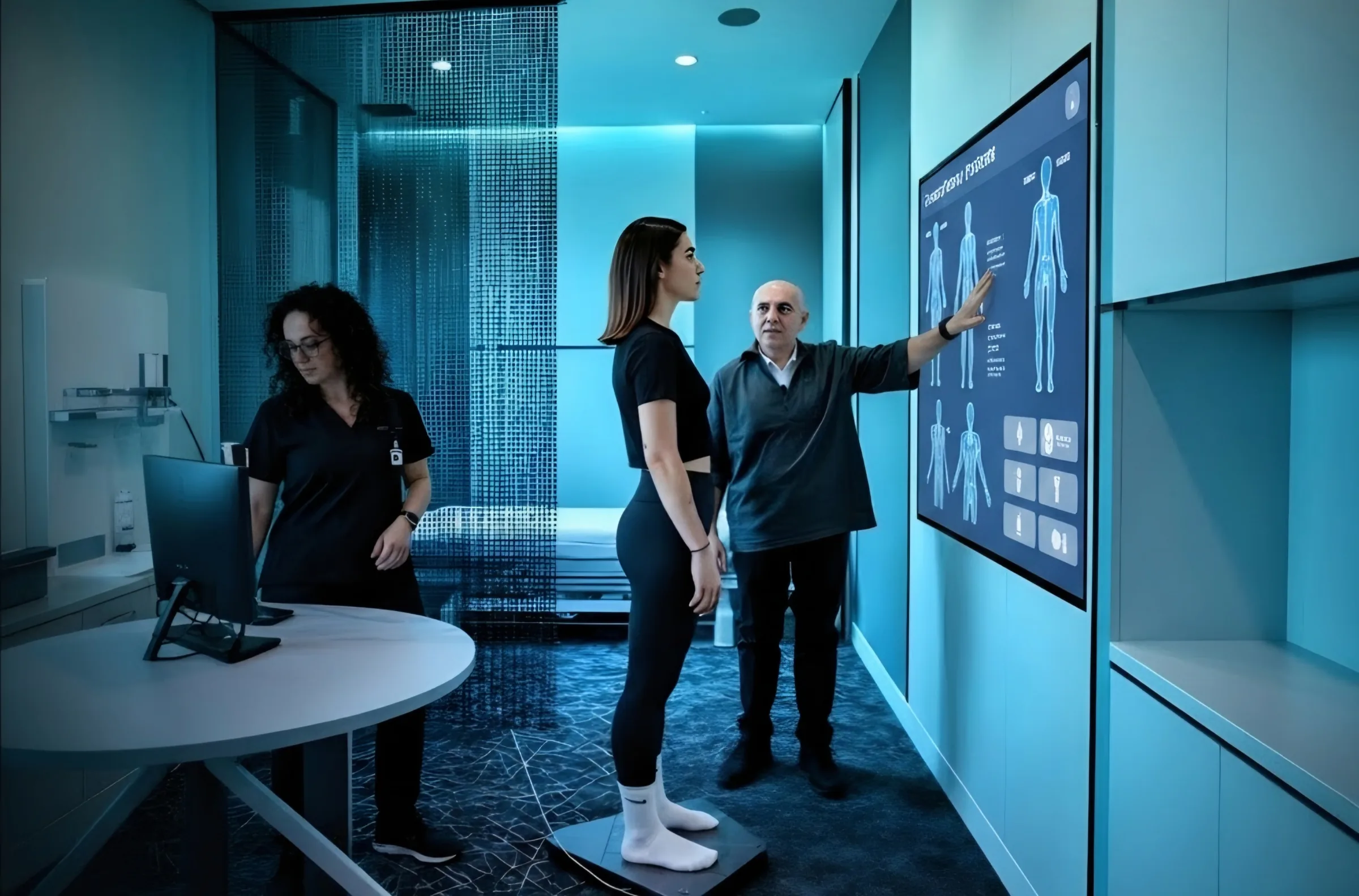
Posturometer is a clinical-grade posture-analysis platform built with Professor Di Rocca for rehabilitation and precision assessment. Advanced algorithms convert sensor data into diagnostic patterns in real time, and a diagnostic dashboard surfaces posture analysis, body-symmetry assessment and pressure-distribution mapping while the patient is still standing on the plate. A tool like that is only as trustworthy as the platform it runs on, and that platform is what CloudxOps was brought in to build.
Clinicians do not care about your deployment pipeline. They care that the dashboard loads, that the symmetry score is the same one they saw last week, and that a multi-site rollout does not lose a patient record. Everything we engineered served that single goal: make the clinical experience boringly reliable, so the science can stay interesting.
The brief: a clinical tool, not a demo
Posturometer was built for real clinics, which raises the bar in ways a consumer app never sees. It speaks to electronic health records, it follows standards-based compliance, it lives inside the native clinical workflow rather than beside it, and it has to scale cloud-side as the practice grows from one room to many sites.
- EHR interoperability, so a completed assessment lands in the patient record, not a silo.
- Standards-based compliance with HIPAA-aware handling of every byte of patient data.
- Native clinical workflow, the platform fits how clinicians already work instead of retraining them.
- Cloud-based and scalable, ready for multi-site deployment without re-architecting.
A scan, from sensor to record
Press Run scan below to walk through what a single assessment looks like from the platform's side. Sensor points light up across the body, frames stream in, a body-symmetry score settles, a pressure-distribution map fills in under the feet, and the finished report is written back to the EHR. Run it again and it re-scans cleanly, exactly as it does between two patients in a busy clinic.
symmetry
The platform underneath the dashboard
Behind that one smooth scan sits the infrastructure CloudxOps delivered. The design priorities were the ones a clinic feels directly: deploys that never go sideways, costs that scale sub-linearly, and an uptime number high enough that a clinician never plans around the platform being down.
- GitOps with FluxCD2 made the cluster a faithful mirror of git. Deployment time dropped 50% and manual deploy errors went to zero, because nothing reaches production except by merge.
- A k3s Kubernetes platform trimmed infrastructure cost 30% while absorbing a 40% traffic increase, the lightweight footprint doing more on less.
- A multi-node cluster removed the single point of failure and lifted uptime from 99.5% to over 99.9%, the difference between a clinic noticing and a clinic never thinking about it.
- Grafana and Prometheus gave us the visibility to cut application response times 25%, tracing slow scans back to the exact service.
- Load balancing carried 1500+ concurrent users across sites without the dashboard ever feeling busy.
Reliability is a clinical feature. A posture score a clinician cannot reproduce is worse than no score at all. Stable infrastructure, immutable GitOps deploys and tight monitoring are what let the diagnostic numbers be trusted, which is the whole point of the product.
What changed for the clinic
The engineering work never appears on the diagnostic dashboard, and that is the success condition. Clinicians got a tool that loads the same way every time, scales as the practice opens new sites, and keeps patient data inside HIPAA-aware boundaries from the sensor plate to the electronic health record.
Takeaways
- GitOps with FluxCD2 halved deployment time and eliminated manual deploy errors.
- A k3s cluster cut cost 30% while absorbing 40% more traffic and serving 1500+ concurrent users.
- Going multi-node lifted uptime from 99.5% to over 99.9% and removed the single point of failure.
- Prometheus and Grafana drove a 25% improvement in response times, all under HIPAA-aware data handling.
Building a clinical-grade product?
We give healthcare platforms the boring reliability they need: GitOps delivery, cost-lean Kubernetes, real monitoring and HIPAA-aware data handling, end to end.
Talk to CloudxOps